The Purple Crocus: A Herald of Spring and a Muse for Art
As winter’s chill begins to fade, a quiet miracle unfolds in gardens, lawns, and woodland edges. Among the first brave blooms to pierce the cold earth is the purple crocus. This diminutive yet vibrant flower is not merely a botanical event; it is a symbol of renewal, a subject of artistic fascination, and a source of inspiration for gardeners and flower lovers alike. Its arrival marks the turning of the seasonal tide, a promise that warmth and color are returning to the world.
The Botanical Pioneer: Understanding the Spring Crocus
To appreciate the crocus fully, one must start with its role in the natural world. Crocuses are perennial plants belonging to the iris family. They grow from corms—bulb-like storage organs—that lie dormant through the winter. As daylight lengthens and soil temperatures gently rise, these corms send up shoots, often blooming while snow still patches the ground. This early emergence is a survival strategy, allowing the plant to capture sunlight and pollinators before the taller foliage of later spring plants shades the forest floor or garden bed.
The most common early spring varieties are often shades of purple, violet, lavender, and white, with some yellow species. The purple crocus, in particular, captures the eye with its rich, saturated hues. Each flower consists of six petal-like tepals that form a graceful cup, rising from a cluster of narrow, grass-like leaves. Their significance extends beyond aesthetics; they are ecological indicators. Their bloom time is a reliable, observable sign for naturalists and gardeners that the spring cycle has genuinely begun.
A Common Misunderstanding: Crocus vs. Autumn Crocus
A point of clarification is essential here. When discussing the “spring crocus,” we refer primarily to species like Crocus vernus (the common crocus). There is also an autumn-blooming crocus, Colchicum autumnale, often mistakenly called a crocus. While visually similar, it is a different genus and contains toxic compounds. The spring crocus celebrated for its cheerful pioneer spirit is non-toxic and safe in garden settings. This distinction is important for gardeners and enthusiasts to ensure they are celebrating and cultivating the correct, safe harbinger of spring.
From Garden to Canvas: The Crocus as Artistic Inspiration
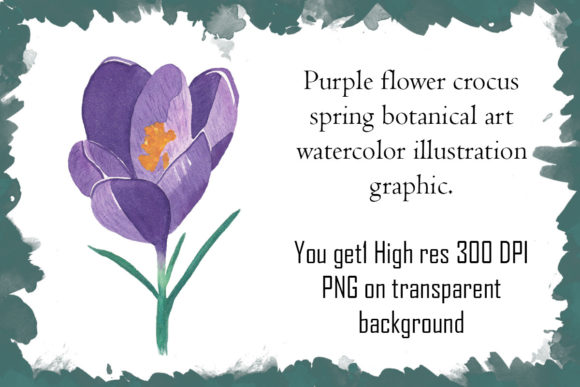
The beauty of the purple spring crocus has long transcended the garden. Its delicate form, striking color contrast against the muted early-spring palette, and symbolic weight make it a perfect subject for art. The described artwork—“Purple flower crocus spring botanical art floral was handpainted with layers of glazing and very detailed that dance with light and shadows”—epitomizes this translation from nature to artistry.
Handpainting with layered glazing is a meticulous technique. It involves applying multiple thin, transparent layers of paint. Each layer modifies the one beneath, building depth, luminosity, and a sense of inner light. This method is perfect for capturing the crocus. The flower’s petals have a subtle translucency; they indeed “dance with light and shadows” as sunlight filters through them in the low, gentle spring rays. An artist using this technique can render not just the shape, but the very essence of the flower—its delicate texture, the play of light from petal edge to heart, and the rich, complex gradients of its purple hue.
Such artwork serves a profound purpose. It fixes a fleeting moment of nature’s cycle into a permanent form of beauty. For those who may not have a garden, or during seasons when the crocus is not blooming, this art brings a piece of spring’s promise indoors. It celebrates the detail often missed in a casual glance, encouraging a deeper observation and appreciation of nature’s craftsmanship.
Practical Relevance in Modern Life
How does this blend of botany and art fit into our contemporary lives? Its relevance is multifaceted.
- For Flower Lovers & Home Decor: High-resolution botanical art, like a 300 DPI PNG on a transparent background, offers incredible utility. It can be used in digital scrapbooking, custom greeting card design for spring occasions, or as a elegant graphic for personal stationery. Printed on quality paper or canvas, it becomes a standalone piece of home decor, bringing a serene, natural aesthetic to living spaces, studies, or offices.
- For Floral Designers & Gardeners: This art is a tool for inspiration and communication. Floral designers might use it in mood boards for spring wedding themes or in promotional materials to evoke a sense of freshness. Gardeners and landscape designers can use such imagery in blog posts, plant catalogs, or educational community guides to illustrate early spring planting successes and garden planning.
- For Creativity & Education: In classrooms or homeschool settings, detailed botanical art is a valuable resource. It aids in teaching plant biology, seasonal cycles, and even art techniques like glazing and observation drawing. For creative professionals in technology, it can serve as a unique texture or pattern source in digital product design, app backgrounds, or website elements, connecting tech with organic beauty.
Cultivating Joy: The Crocus in Gardening and Garden Themes
Beyond observation and artistry, the purple crocus invites participation. Gardening with crocuses is remarkably accessible, even for beginners. They are low-maintenance, deer-resistant, and multiply over time, offering more beauty each year. Planting corms in the fall in well-drained soil, in sun to partial shade, yields a rewarding spring display. They thrive in lawns (creating “flower lawns”), rock gardens, borders, and containers.
Their gardening significance is profound. They provide one of the first nectar sources for emerging pollinators like bees. In a time of ecological awareness, planting early-blooming natives or well-adapted cultivars like crocuses supports local ecosystems. Furthermore, the psychological impact is notable. After a long winter, the act of seeing and tending these first flowers—or designing a garden theme around them—is an active engagement with hope and renewal, a tangible connection to the natural cycle that benefits mental well-being.
Building a Broader Understanding
To see the purple crocus only as a pretty flower is to miss its layered significance. It is:
- A Biological Clock: Its bloom is a phenological event, tied to climate patterns. Observing its timing can inform understanding of local microclimates and even broader climate change trends.
- A Cultural Symbol: Across many cultures, early spring flowers symbolize resilience, new beginnings, and the triumph of life over dormancy. They feature in poetry, literature, and festival traditions.
- A Bridge Between Disciplines: It connects botany with art, gardening with design, ecology with personal wellness. It shows how a single element of nature can enrich multiple facets of human life and creativity.
The Digital Artifact: A Tool for Unlimited Creation
The description concludes with a powerful offer: “You get 1 300 DPI high res PNG on transparent background.” This is not just a file; it is a key to creative freedom. A 300 DPI (dots per inch) resolution ensures the image retains exquisite detail even at large print sizes. The transparent background means the artwork—every delicate brushstroke, every glazed layer capturing light—can be seamlessly placed into any digital or physical project without a distracting white box.
This aligns perfectly with modern creative workflows. Whether you are a hobbyist creating a personalized spring invitation, a professional designer needing a flawless asset for a client’s garden center website, or an educator assembling a visual guide, this format provides maximum versatility. It empowers the user to “create to your heart’s content,” integrating this symbol of spring into blogs, social media graphics, printed art, craft projects, or digital portfolios. The art becomes a collaborative element, merging the artist’s skilled interpretation with the end-user’s creative vision.
In essence, the purple crocus—in its botanical form and its artistic representation—is a gift of spring. It teaches us about resilience and timing in nature. It inspires artists to capture ephemeral beauty with timeless technique. It provides gardeners with a simple, joyful project. And as a high-quality digital artifact, it becomes a versatile tool for expression across countless aspects of modern life. From its first appearance in the cold soil to its refined depiction on a transparent digital canvas, the purple crocus continues to dance with light and shadows, inviting us all to notice, create, and celebrate the renewal it so faithfully heralds.