Understanding the Abstract Floristic Design Collection
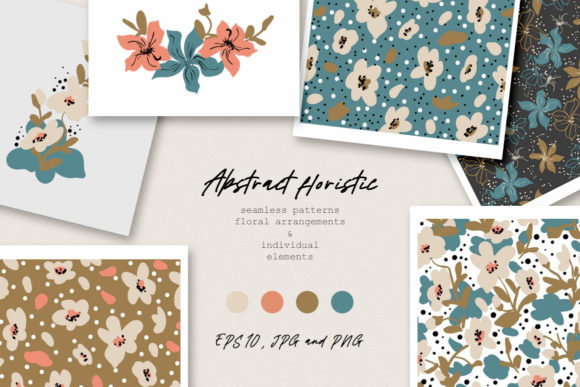
The digital design marketplace offers an immense variety of assets for creators, from simple icons to complex thematic bundles. Among these, the Abstract Floristic collection represents a specific and comprehensive set of floral-inspired graphic resources. It is defined as a curated package of seamless patterns, floral arrangements, and individual botanical elements, all rendered in an abstract artistic style. This collection is not a singular piece of art but a toolkit, providing multiple file formats like PNG, JPG, and EPS10 to accommodate different software and project requirements.
At its core, Abstract Floristic is built for versatility. The inclusion of 14 seamless patterns, 7 floral arrangements, and 55 individual elements means a user receives a substantial library of coordinated components. The technical specifications, such as 300 DPI resolution for PNG files and Adobe Illustrator 10 compatibility for EPS vectors, indicate a focus on professional-grade usability. The abstract nature of the artwork suggests a departure from realistic botanical illustration, leaning instead towards stylized forms, simplified shapes, and creative color possibilities that can be modified by the end user.
Evaluating Interest in Abstract Floristic
Individuals or businesses might research such a collection for several distinct, practical reasons. A primary interest often stems from a need for cohesive, ready-to-use design elements to accelerate a project's visual development. For example, a designer tasked with creating a boho-themed poster series, textile patterns, or cosmetic packaging could find significant value in a pre-made collection that offers stylistic consistency. The time saved in creating each floral motif from scratch is a tangible consideration.
Another reason for evaluation is the requirement for multi-format assets. Projects often span different mediums—print (requiring high-resolution PNG/JPG) and scalable vector work for logos or large-format printing (requiring EPS). A collection that provides both, like Abstract Floristic, simplifies asset management. Furthermore, the emphasis on editable colors and sizes addresses a common need for customization. A brand might wish to adapt the floral elements to match its specific color palette, making such a flexible collection more appealing than fixed-color artwork.
Interest may also come from those seeking to establish a particular aesthetic tone. The "abstract" descriptor implies a modern, artistic, and often minimalist take on florals, which differs from traditional, ornate illustrations. This can be a strategic choice for projects aiming for a contemporary, chic, or understated look in home decor, website graphics, or product branding.
Benefits, Tradeoffs, and Practical Considerations
The potential benefits of utilizing the Abstract Floristic collection are clear. It offers efficiency, providing a large number of related assets that reduce initial design time. The stylistic coherence across patterns, arrangements, and elements ensures that a designer can mix and match components without worrying about artistic mismatch. The professional technical specs (300 DPI, vector formats) support high-quality output for commercial work. Finally, the editable nature empowers designers to adapt the collection to various project needs without requiring advanced illustration skills.
However, there are inherent tradeoffs and considerations. The abstract style is a specific artistic choice. While versatile, it may not suit projects demanding photographic realism or highly detailed, classical botanical art. Users must assess whether the collection's aesthetic aligns with their project's visual goals. Additionally, while the collection is comprehensive within its abstract floral theme, it is inherently limited to that theme. A project requiring diverse imagery beyond florals would need supplementary assets.
Another consideration is the skill level required for optimal use. Although colors and sizes can be changed, effectively manipulating the EPS vector files fully requires some familiarity with Adobe Illustrator or similar vector software. A user solely reliant on raster-based software (like Photoshop for PNG files) might not leverage the full scalability benefits of the EPS formats. Evaluating one's own software proficiency is a practical step.
Expectations should be set around licensing and usage. Typically, such collections are sold under a license that permits commercial use, but the exact terms—such as limitations on resale as a standalone product or requirements for attribution—must be reviewed individually. This is a critical, often overlooked, decision-making factor.
Situations Where Abstract Floristic is a Strong Fit
This collection is particularly well-suited for specific project contexts. It is a strong fit for designers and businesses operating in niches where abstract, nature-inspired design is prevalent. This includes modern boutique cosmetics branding, eco-friendly product packaging, contemporary home decor items (like wall art or textile designs for cushions), and boho or festival-related promotional materials. In these areas, the aesthetic is not just decorative but often integral to the brand identity.
It is also a practical choice for projects with tight timelines or limited illustration budgets. Having a bank of 55 individual elements and 14 patterns means a designer can quickly populate a layout, create variations for a product line, or develop a suite of marketing materials without commissioning custom art for each item. Startups or small creative teams with resource constraints might find this efficiency invaluable.
Furthermore, for projects requiring scalability and adaptation, the vector file support makes Abstract Floristic a robust option. A pattern needed for a small cosmetic jar label and a large store display banner can be derived from the same EPS file, ensuring visual consistency and quality across scales.
When Alternatives Might Be Worth Considering
Despite its strengths, alternatives should be explored in certain situations. If the project's core requirement is hyper-realistic or scientifically accurate botanical imagery—for instance, in a gardening catalog, a herbal medicine website, or a textbook—then a collection of photographic stock images or detailed realistic illustrations would be a more appropriate alternative. The abstract style would likely fail to meet the communicative need for accuracy.
Similarly, for projects demanding a highly unique, custom-designed artistic voice that is central to a brand's differentiation, investing in commissioned original artwork might be preferable. While Abstract Floristic is customizable, it remains a pre-made template. A brand aiming for a completely singular, unforgettable visual identity might find pre-made collections, even excellent ones like Abstract Floristic, too generic.
Alternatives also exist in terms of scope. A designer working on a broad-scope project needing imagery across multiple themes (floral, geometric, urban, etc.) might benefit more from a subscription to a general stock graphics service that offers a wider, albeit less coordinated, library. Conversely, a designer needing only one or two specific floral patterns might find purchasing individual patterns more cost-effective than investing in the entire Abstract Floristic bundle.
Practical Decision-Making Insights
To determine if the Abstract Floristic collection aligns with your goals, conduct a simple needs audit. First, define the aesthetic requirement: is "abstract floral" a match for your project's mood and audience? Review the collection's sample visuals critically against your project drafts. Second, assess your technical workflow: will you use both raster and vector formats? Does your team have the software skills to edit the EPS files? Third, calculate the value: compare the cost of the collection against the time and expense of creating similar assets independently or sourcing them piecemeal.
Consider also the longevity of your need. If you are in a business that consistently uses floral motifs (like a stationery brand or a wedding planner), a comprehensive collection can be a reusable asset for many future projects, increasing its long-term value. For a one-off project, the calculation might be different.
Ultimately, the decision hinges on alignment. Abstract Floristic is not a universal solution but a specialized tool. It excels when the need for efficiency, stylistic coherence in an abstract floral theme, and technical flexibility in file formats intersects. By objectively evaluating your project's specific requirements against these strengths, you can make a informed choice about whether this collection is the right resource to invest in, or if your path leads to a different design solution altogether.